
Three-bedroom homes in western Centurion cluster in a narrow price band, making them look interchangeable on a portal search. Rooihuiskraal, The Reeds, and Celtisdal all show up for the same R1.2 million to R2.5 million filter, all promise proximity to schools and the N14, and all claim family-friendliness. The similarity is a trap. What separates them is not the sticker price but what that price actually buys: cubic metres of living space, square metres of garden, and monthly outgoings that persist long after transfer.
I spent the last three weeks driving these suburbs during the 7am school run and again at 6pm, measuring what the listings do not show: how long it takes to clear Rubenstein Drive once Laerskool Rooihuiskraal opens its gates, where The Reeds’ townhouse complexes bottleneck into single-file exit queues, and which Celtisdal streets become parking lots for visitors to the local shopping strips. The numbers below come from portal sampling between mid-May and mid-June 2024, cross-checked against registered sale prices from deeds office records for transactions concluded February through April 2024.
What the price per bedroom actually reveals
The Reeds advertises the lowest entry point for a three-bedroom home, with townhouses averaging R350,000 to R480,000 per bedroom and freehold houses at R520,000 to R690,000. This is not negotiable arithmetic; it is geography. The Reeds was laid out at higher density, with townhouse stands compressed to 150–300 square metres and freehold plots rarely exceeding 700 square metres. The savings on purchase price translate directly into less garden, less distance between neighbours, and more reliance on communal facilities.
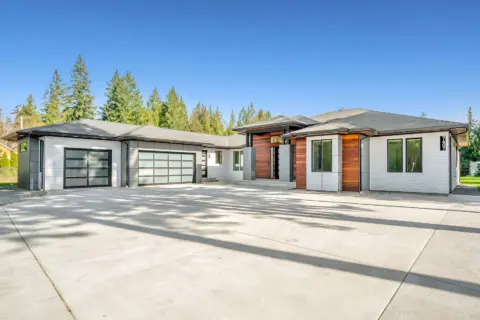
Rooihuiskraal asks more per bedroom, R680,000 to R850,000 for freehold and R450,000 to R600,000 for townhouses. However, the freehold stock sits on 800–1,200 square metre stands with private pools in more than 45% of properties. Double garages are standard, not an upgrade. The township portion of the suburb, developed earlier, carries older finishes and higher maintenance liability. The price per bedroom does not capture this. A buyer comparing R750,000 per bedroom in Rooihuiskraal against R600,000 in The Reeds needs to budget for roof repairs, kitchen replacement, or pool resurfacing that may swallow the apparent gap within five years.
Celtisdal occupies the middle ground at R600,000–R780,000 per bedroom for freehold and R400,000–R550,000 for townhouses, with stands of 500–850 square metres. The stock is newer than Rooihuiskraal’s core, better insulated, and more consistently fitted with modern kitchens and bathrooms. Pool prevalence sits at 35–40% for freehold homes, lower than Rooihuiskraal but with less deferred maintenance risk. The suburb’s townhouse complexes offer 180–380 square metre stands, slightly more generous than The Reeds, with communal pools standard in most larger developments.
The stand size you cannot negotiate later
A stand is fixed. You can renovate a kitchen; you cannot manufacture garden. Rooihuiskraal’s freehold buyers purchase space that supports extension, a second dwelling for extended family, or simply breathing room between properties. The Reeds’ freehold plots, at 450–700 square metres, still accommodate children and pets but constrain future building. The Reeds’ townhouse buyers, on 150–300 square metres, are purchasing interior volume and location, not land as an appreciating asset.
This distinction affects ownership structure as much as lifestyle. Freehold in Rooihuiskraal or Celtisdal means direct title to the erf, with no complex levy and no body corporate vote required for exterior changes. Sectional title in The Reeds or Celtisdal townhouses means monthly levies, shared decision-making, and rules governing pets, parking, and external appearance. The Reeds’ townhouse levies run R1,500–R3,000 monthly, the highest of the three suburbs, reflecting extensive communal facilities that some families use intensively and others subsidise without benefit.
Parking provision follows the same pattern. Rooihuiskraal freehold homes almost universally offer double garages or substantial carports. The Reeds freehold properties more commonly show double carports, sometimes only a single garage, with visitor parking that congests during evening hours. The Reeds’ townhouse stock frequently allocates a single carport or open bay per unit, a friction point for two-car families that only becomes apparent after move-in. Celtisdal’s townhouses typically provide a single garage plus an additional open bay, a small but meaningful difference in daily convenience.
Municipal costs and the hidden monthly gap
Rates and utility bills do not appear in bond pre-approval calculations, but they shape household cash flow for decades. For a family of four in a three-bedroom freehold home, Rooihuiskraal’s older, larger properties generate the highest municipal burden, estimated at R2,500–R3,800 monthly. Property rates alone run R1,200–R1,800, driven by stand size and valuation. Water and electricity consumption, on stands with established gardens and older plumbing, push the upper bound.
The Reeds’ freehold homes run slightly lower at R2,200–R3,500, reflecting smaller stands and more compact construction. The Reeds’ townhouses show the lowest direct municipal costs at R1,500–R2,300, but this figure excludes levies that typically add R1,500–R3,000. A buyer comparing total monthly outgoings must add levy to rates to reach true cost, which diminishes The Reeds’ apparent affordability.
Celtisdal’s freehold homes cluster at R2,400–R3,700, marginally below Rooihuiskraal, with newer insulation and more efficient fittings offsetting valuations that have risen with the suburb’s popularity. Celtisdal’s townhouses show R1,700–R2,500 in municipal costs plus R1,300–R2,800 in levies, positioning them between the other two suburbs in total monthly commitment.
The ownership structure question thus becomes: do you prefer higher direct municipal costs with no intermediary body, or lower direct costs with a levy and governance layer? Neither is universally correct, but the choice should be deliberate, not discovered after transfer.
Asking price versus what actually transfers
Portal listings in all three suburbs float above reality, but the gap varies in ways that signal market dynamics. Rooihuiskraal’s freehold asking prices averaged 6.5% above registered sale prices for February–April 2024 transactions, with townhouses at 5.8%. This narrow spread suggests sellers who know their market and buyers who arrive prepared. Negotiation room exists, but it is measured in tens of thousands, not hundreds.
The Reeds showed the widest gap: 8.2% for freehold, 7.5% for townhouses. Higher listing volume and more competitive seller positioning create this buffer. Buyers here can push harder, wait longer, or walk away with more alternatives in view. The risk is time spent on properties whose sellers are testing optimism against a market that has not validated their price.
Celtisdal’s 7.1% freehold and 6.8% townhouse gaps reflect newer stock and aspirational pricing. Sellers of three-year-old homes with modern finishes believe, sometimes correctly, that their property commands premium over older comparatives. The market partially validates this, but not to the full asking premium.
These percentages translate to real money. On a R1.8 million asking price, an 8.2% gap is R147,600 of negotiation room; a 5.8% gap is R104,400. Buyers who treat asking prices as informative rather than determinative avoid overcommitment.
What the school run and evening traffic show
Street-level observation fills gaps that data cannot. Rooihuiskraal’s older road network, designed for lower volume, strains at peak hours. Rubenstein Drive and connecting streets slow to walking pace between 7:00 and 7:40, with parents parking on verges and walking children the final 200 metres. The afternoon dispersal is quicker but no less congested. Evening hours reveal a quieter suburb, with limited dining and entertainment options within walking distance, a trade-off for the larger stands.
The Reeds’ internal road system, newer and more gridded, handles volume better but concentrates it at complex exit points. Several townhouse developments feed into single access roads that become bottlenecks. The Reeds’ proximity to shopping centres and medical facilities generates evening activity that Rooihuiskraal lacks, with correspondingly more traffic and ambient noise.
Celtisdal’s layout, developed most recently, distributes traffic across a wider network. School congestion exists but disperses faster. Evening activity clusters around retail strips rather than residential streets, preserving quieter neighbourhoods. The suburb’s newer infrastructure shows in drainage, pavement condition, and street lighting that older portions of Rooihuiskraal are only now receiving through municipal upgrade programmes.
Choosing between them
A family with R1.5 million, two children, and one parent working from home faces different arithmetic than a family with R2.2 million, three children, and both parents commuting to Pretoria CBD. The first family might find The Reeds’ townhouse stock viable if they accept levies, compact stands, and communal recreation. The second might find Rooihuiskraal’s freehold space essential for home office, garden play, and future extension, with higher purchase and municipal costs amortised over longer ownership.
Celtisdal attracts buyers who want newer construction without estate pricing. They value infrastructure quality and moderate stand size, and they can absorb the mid-range premium for reduced maintenance risk. It is less a compromise than a different calculation of time versus money: less weekend repair work, more predictable monthly outgoings, slightly less space than Rooihuiskraal offers.
The budget that stretches furthest depends on what you are stretching it for. Land, buildings, location, convenience, and predictability trade against each other differently in each suburb. The portal search that treats them as equivalent is doing you no favours.