
Centurion buyers still ask the wrong dolomite question. They ask whether a suburb is “on dolomite” as if that settles the matter. It does not. A general map can tell you the area has dolomitic ground, but it cannot tell you whether the stand you are buying sits on stable conditions, old instability, poor drainage, or a hidden problem waiting for the first leak.
Most people skip this point, and it can cost them the most. In Centurion, and in the land south of Pretoria more broadly, dolomite is a property issue, not an abstract geology lesson. Water is usually the trigger, not the headline. A leaking pipe, a sewer problem, blocked gutters, or drainage that pushes water where it should never go can change a quiet stand into a serious liability.
Dolomite is not a suburb label
Dolomite is a rock that can dissolve over time when water moves through it. This creates voids, weakened zones, and sometimes sudden ground failure. In practical terms, a home can look fine while the ground beneath it is not. One stand in a dolomitic area can be a good buy, and the next one a mess.
Centurion has long carried this risk in parts of its older and developing stock, and the names buyers keep hearing are not random. Lyttelton, Valhalla, and parts of Eldoraigne have all had real dolomite-related instability in the past. This does not mean every property there is unsafe; it means you do not get to stop at the suburb name.
A buyer who relies on a broad online map is buying a rough sketch, not a property assessment. Maps show where dolomite is likely to occur. They do not show the depth of overburden, local cavities, pinnacles, drainage history, or whether the stand was classified properly after a site investigation. These details are important.
The only question that counts is the stand
Ask for the specific risk classification for the erf, not the general area. A stand in a mapped dolomitic zone can still be classed as lower risk after proper investigation. Another stand in the same street can come back with a much more cautious classification because ground conditions change quickly over short distances.
The classification you want to see is based on a proper geotechnical investigation, not on somebody pointing to a map and saying “this area is dolomitic.” That report should tell you what was found, how the ground was tested, and what the engineer recommends for that exact piece of land.
If a seller cannot produce those documents, do not wave it through because the house looks neat and the kitchen was recently redone. Fresh paint does not stabilise ground.
The documents buyers should ask for
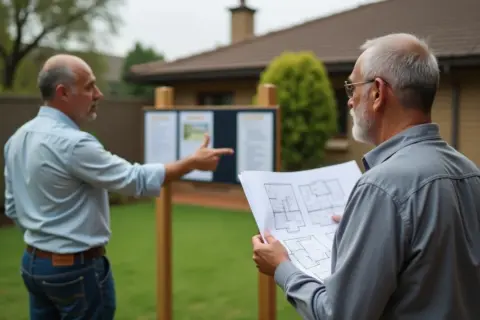
Request the geotechnical investigation report for the stand. This is the core document. It should show the borehole results, the ground conditions, the dolomite classification, and the foundation and drainage recommendations for that property.
Then ask for the engineering records. You want proof that the foundations, structure, and drainage were designed and built by a registered professional and that the finished work matches the dolomite requirements for the site.
If the home is newer, ask for the NHBRC paperwork as well. The home builder’s warranty certificate is part of that picture, and if the property sits on dolomitic ground there may also be a dolomite risk management plan or similar documentation linked to the home’s ongoing obligations.
Do not ignore the as-built drainage plans. Water management is often the difference between a stand that remains stable and a stand that slowly starts telling on itself.
Call the Council for Geoscience
The Council for Geoscience is the official place to check how ENGEODE enquiries work. That is the national dolomite databank, and it exists for exactly this kind of due diligence. If you are buying in Centurion, this is not the place to improvise.
When you make an enquiry, have the erf number, township name, and street address ready. Ask what they need for the stand-specific assessment and how the current process works. If a buyer or seller is treating this as a vague “dolomite check,” they are already behind.
A broad map can be useful as a first filter. ENGEODE is what you use when you actually want an answer.
Bring in the right engineer
A geotechnical engineer should be part of the conversation before the offer becomes a headache. Ask them to read the history, the drainage, the add-ons, and the way the property has been altered over time.
This is where the real risk often hides. A swimming pool, patio, retaining wall, extra room, or hard paving can change how water moves across a stand. A new addition can look harmless on paper and still create exactly the conditions that make dolomite fail. If the drainage now pushes water towards the house, the risk is no longer theoretical.
What to look at when you walk the property
Some warning signs are obvious if you know what you are looking for. Cracks that run diagonally through brickwork, especially from corners of windows and doors, deserve attention. Floors that feel uneven, doors that no longer close properly, windows that stick, leaning boundary walls, and gaps that appear where they did not exist before all point to movement.
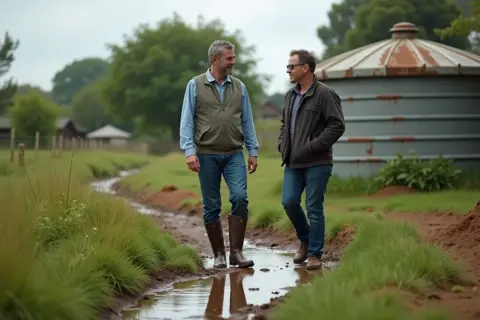
Outside, look for strange dips in the garden, wet patches that do not make sense, or a change in level after heavy rain. If the site gets waterlogged in places where it should not, ask why.
Do not accept the casual answer that “all older houses have cracks.” Some cracks are cosmetic, but some are the first page of a much more expensive story.
What a careful buyer does differently
A careful Centurion buyer does three things. First, they stop treating dolomite as a suburb stereotype. Second, they ask for the documents that speak to one stand, not one map. Third, they talk to people who deal with ground risk for a living, not people who only know how to market a house.
That approach makes the deal honest.
Centurion still has many good properties, and some of them sit in dolomitic areas without problems. The mistake is assuming the area name tells you enough. It does not. The erf tells the real story, and the paperwork either backs it up or exposes a gap.
If you are buying here, ask the dolomite question before you argue about the tiles, the levy, or the school run. By then, you are already looking in the wrong order.