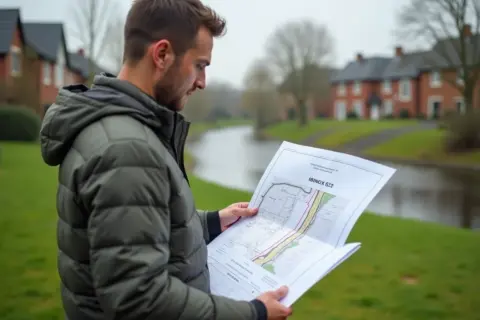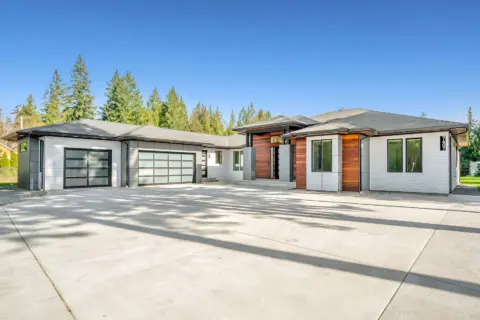

A buyer recently told me they were torn between three homes: a renovated cottage in Irene, a modern build in Southdowns, and a sprawling estate in Cornwall Hill. All three were priced above R6 million. All three had marble kitchens, underfloor heating, and automated gates. The finishes were nearly identical. Yet one of these purchases would hold value in ways the others could not, and the difference had nothing to do with the countertops.
This is the trap in southern Centurion’s premium market. Replicable luxury is everywhere. Genuine location premium is not.
What the registered sales actually show
Registered sales data from the past twelve months reveals three distinct market tiers, not one continuous premium band. Irene’s median transaction value sits at R3.85 million, drawn from roughly 70 to 85 annual sales. The range is wide because Irene offers varied products. Older freehold homes on 800 square metre stands trade alongside newer cluster developments at half that size. The village character attracts buyers who want established trees, walking distance to Irene Village Mall, and the irregular streetscape that comes with a suburb laid out before estate living existed.
Southdowns Estate commands a median of R6.9 million across 40 to 55 transactions annually. The jump from Irene reflects a single product type: controlled-access estate living with consistent stand sizes between 1,000 and 2,500 square metres, green belts maintained by a homeowners association, and on-site equestrian facilities that no individual buyer could replicate.
Cornwall Hill tops the trio at R9.2 million median, but with only 25 to 35 sales per year. Stands here run from 4,000 to 10,000 square metres. The transaction frequency is low because supply is structurally constrained. Owners tend to stay, and when properties do come to market, they attract a narrow pool of buyers with the capital and the specific preference for privacy at scale.
The real cost of living there
Monthly levies separate the estates from the village, affecting cash flow long after transfer. Irene freehold buyers pay municipal rates only. Cluster or sectional title developments in Irene levy R1,500 to R3,500 monthly. Southdowns residents pay R4,500 to R6,500, which covers perimeter security, road maintenance, and the upkeep of communal facilities including the equestrian centre. Cornwall Hill levies run R7,000 to R9,500, funding private infrastructure management across vast common areas.
These levies are the purchase price for amenities that would otherwise require individual effort and coordination. Buyers must budget for them as permanent costs, not one-off fees.
Maintenance escalates with stand size, surprising new owners. A Cornwall Hill estate with 4,000 square metres of garden, multiple water features, and a heated pool can absorb R3,500 to R8,000 monthly in garden services alone, plus R1,500 to R3,000 for pool maintenance. Annual upkeep for bespoke finishes, home automation, and climate control systems adds R20,000 to R50,000 or more. Southdowns properties typically run R2,000 to R4,000 for gardens and R10,000 to R25,000 annually for general upkeep. Irene’s older homes on larger stands may need R5,000 to R15,000 yearly for structural maintenance, while newer clusters cost less to maintain but offer none of the land.
Schools, roads, and the minutes that matter
All three suburbs sit within five to ten minutes of the N1 and R21, and eighteen to twenty-five minutes from O.R. Tambo International Airport. The difference is measured in daily texture, not highway access.
Southdowns College sits inside the estate. Cornwall Hill College sits inside its namesake. For families with children at either school, the location premium is the elimination of morning traffic from their lives. That cannot be installed by a renovation. Irene buyers drive five to ten minutes to either college, or select from Irene Primary, Curro Thatchfield, Lyttelton Manor High, or Sutherland High. The trade-off is more choice against less convenience.
How to spot what you cannot replicate
The core skill for buyers in this market is separating scarce attributes from expensive ones. A kitchen with integrated Gaggenau appliances and bookmatched quartz costs what it costs. It can be built in Waterkloof, in Midstream, or in a resale home in Irene. It is not a location premium. It is a finish.
What cannot be replicated includes: a 6,000 square metre stand in Cornwall Hill, where no further subdivision is possible; the legal right to keep horses within Southdowns’ estate framework; the established canopy and street grid of Irene’s older sections; and the time saved by walking a child to school without crossing a public road.
Buyers should value properties by first stripping out the finishes. Imagine the home with standard cabinetry, standard tiles, standard appliances. What remains? In Cornwall Hill, the land itself justifies a significant portion of the price. In Southdowns, the estate infrastructure and school access do. In Irene, the village character and proximity to amenities do. In each case, the premium is tied to something fixed and finite.
Reading the market correctly
Days on market and transaction frequency tell their own story. Irene’s higher turnover suggests liquidity for sellers and more entry points for buyers. Cornwall Hill’s low frequency rewards patience and punishes urgency. A buyer who must sell within two years should understand that Cornwall Hill’s pool of qualified purchasers is deep but narrow. Southdowns occupies a middle ground: enough transaction volume to establish clear pricing, but selective enough that properties with genuine premium attributes stand apart from those relying on finishes alone.
The buyer with the R6 million budget and three similar kitchens to choose from should look past the stone surfaces. One property sits on land that cannot be manufactured. Another sits inside a legal and physical framework that cannot be duplicated by a neighbour’s renovation. The third sits in a location where the premium is already priced in, but the scarcity is less certain. The finishes are the distraction. The land, the access, and the irreplaceable framework are the investment.