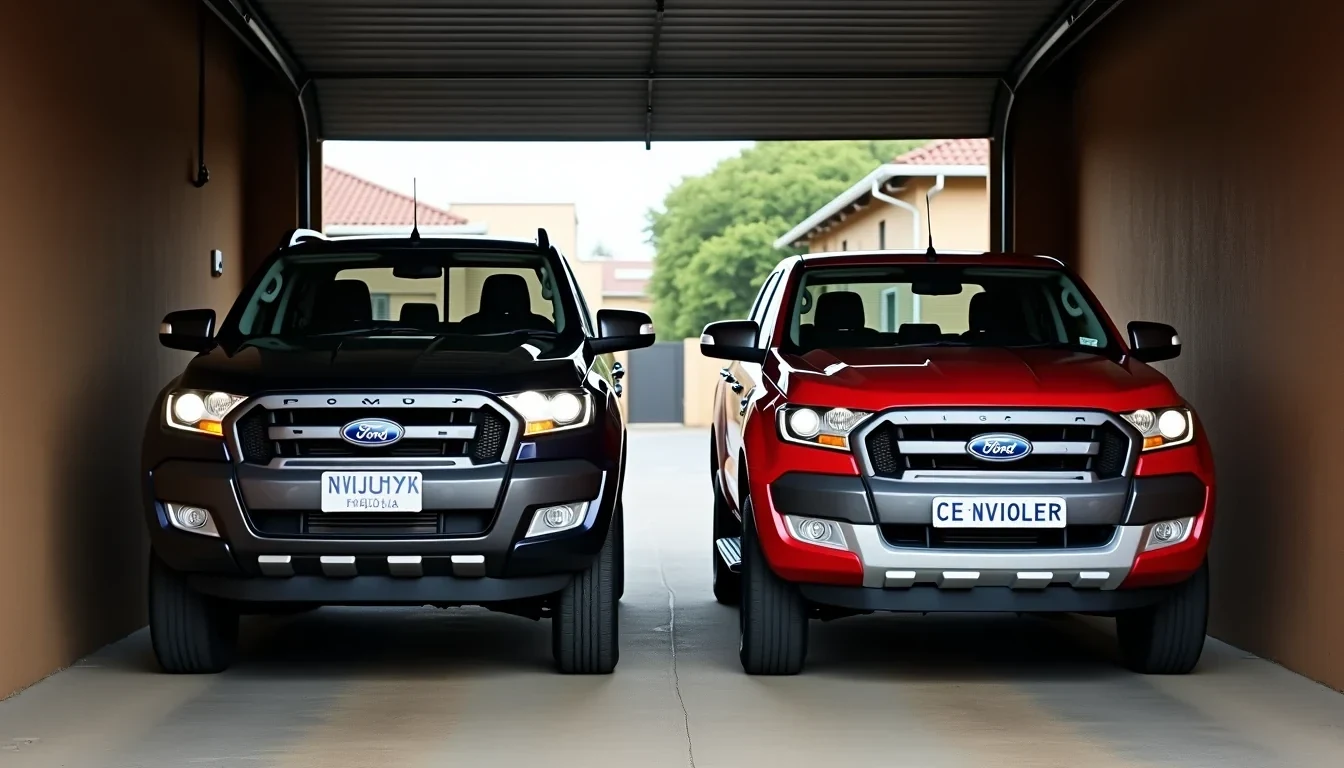
A Toyota Hilux double cab is 1.9 metres wide before you unfold the mirrors. Park two of them in a 5.5 metre garage and you have less than 85 centimetres between them to open a door, squeeze past, or breathe. This reality behind half the “double garage” labels in Centurion listings costs sellers both time and money.
The numbers on the plan versus the vehicle in the driveway
Current listings in Amberfield, The Reeds, or older phases of Midstream repeat the phrase: “double garage.” What that actually means varies by a full metre or more. Older stock, particularly in complexes built during the 1990s and early 2000s, often sits at 5.0 to 5.5 metres internal width with matching depth. Those dimensions were drafted when a Volkswagen Golf was considered a standard family car. A modern Ford Ranger or Fortuner needs roughly 6.5 metres of width and 6.0 to 6.5 metres of depth to allow two adults to exit without gymnastics, plus room for the bicycles and tools that inevitably accumulate.
Vehicles have grown in every direction, widening the gap between label and function. A BMW X5 or Mercedes GLE now pushes past 2.2 metres with mirrors deployed. Two such vehicles in a nominal double garage do not leave a workable space; they leave a parking puzzle that owners abandon after the third scraped door panel. Internal pillars, geysers, and built-in shelving steal further centimetres that the floor plan never advertised.
What the driveway and door do to your morning
Internal width is only half the test. A steep driveway, common in hillside estates around Rooihuiskraal and Wierda Park, can turn parking into a contact sport. Gradients steeper than 1:6, roughly 9.5 degrees, catch the low front bumper of a sedan or the long rear overhang of a bakkie. Owners in these complexes learn to approach at angles that waste time and fuel, or they simply stop using the second bay.
Garage door configuration matters more than buyers expect. A single 5.2 metre door forces precise alignment for both vehicles every single entry. Two separate 2.6 metre doors, separated by a central pillar, often prove more practical despite the lost width. The pillar gives drivers a visual target and reduces the risk of simultaneous damage to both vehicles when someone misjudges by 15 centimetres on a rainy evening.
Estate rules that turn one space into none
Centurion townhouse complexes have tightened parking rules in direct response to the same squeeze. Pavement parking, once tolerated in many estates, now draws fines from body corporates. Visitor bays carry strict time limits, two hours in several complexes I have worked in. Trailers, caravans, and commercial vehicles face outright overnight bans. The practical effect is to push every vehicle belonging to a household onto its own erf, whether the garage can absorb them or not.
Multi-vehicle households are now standard in the three-bedroom family segment. Two working adults plus a teenage driver is a common configuration in suburbs like Eldoraigne and Lyttelton Manor. When the nominal double garage cannot actually house two daily drivers, the household faces a permanent choice: risk estate penalties, pay for off-site storage, or eliminate the property from consideration before making an offer.
The storeroom with a garage door
Some listings solve the label problem without solving the parking problem. A storeroom fitted with a garage door reads on paper as covered parking. In practice it may lack the depth for a modern vehicle, the height for a roof rack, or the structural access to function as anything more than a secure cupboard. Buyers who discover this after transfer have paid a premium for a feature that does not perform. Sellers who understand the distinction early can price correctly or invest in a genuine conversion before listing.
What functional parking does to your sale
Registered sales data in Centurion’s three-bedroom family segment shows a consistent pattern. Properties with verifiably usable double garages, meaning two modern vehicles can enter, park, and exit without daily friction, move faster through the market. The liquidity advantage is measurable in days on market and in the quality of offers received. Buyers in this segment have alternatives; they do not need to tolerate a parking compromise when the next viewing in Eldoraigne or Highveld offers genuine utility.
The price effect is harder to isolate precisely because garages do not transact independently. Anecdotal evidence from recent sales suggests a functional double garage contributes meaningfully to buyer willingness to meet asking price, while a nominal one becomes the explicit reason for a low offer or a withdrawn second viewing. In a segment where families are already calculating school fees and commute costs, adding a parking workaround to the monthly budget often shifts a property from “maybe” to “no.”
How to read your own garage before the market does
If you are selling in Centurion, measure before you list. Internal width, internal depth, door width, and the approach from the street. Park your own vehicles and observe the daily friction. Check your estate conduct rules for visitor limits, trailer prohibitions, and pavement restrictions. If your double garage is genuinely two spaces, that is a selling point to emphasise with dimensions and photographs. If it is not, price for the reality and disclose before the buyer’s second visit. The market recognises honesty faster than it forgives a disappointed inspection.