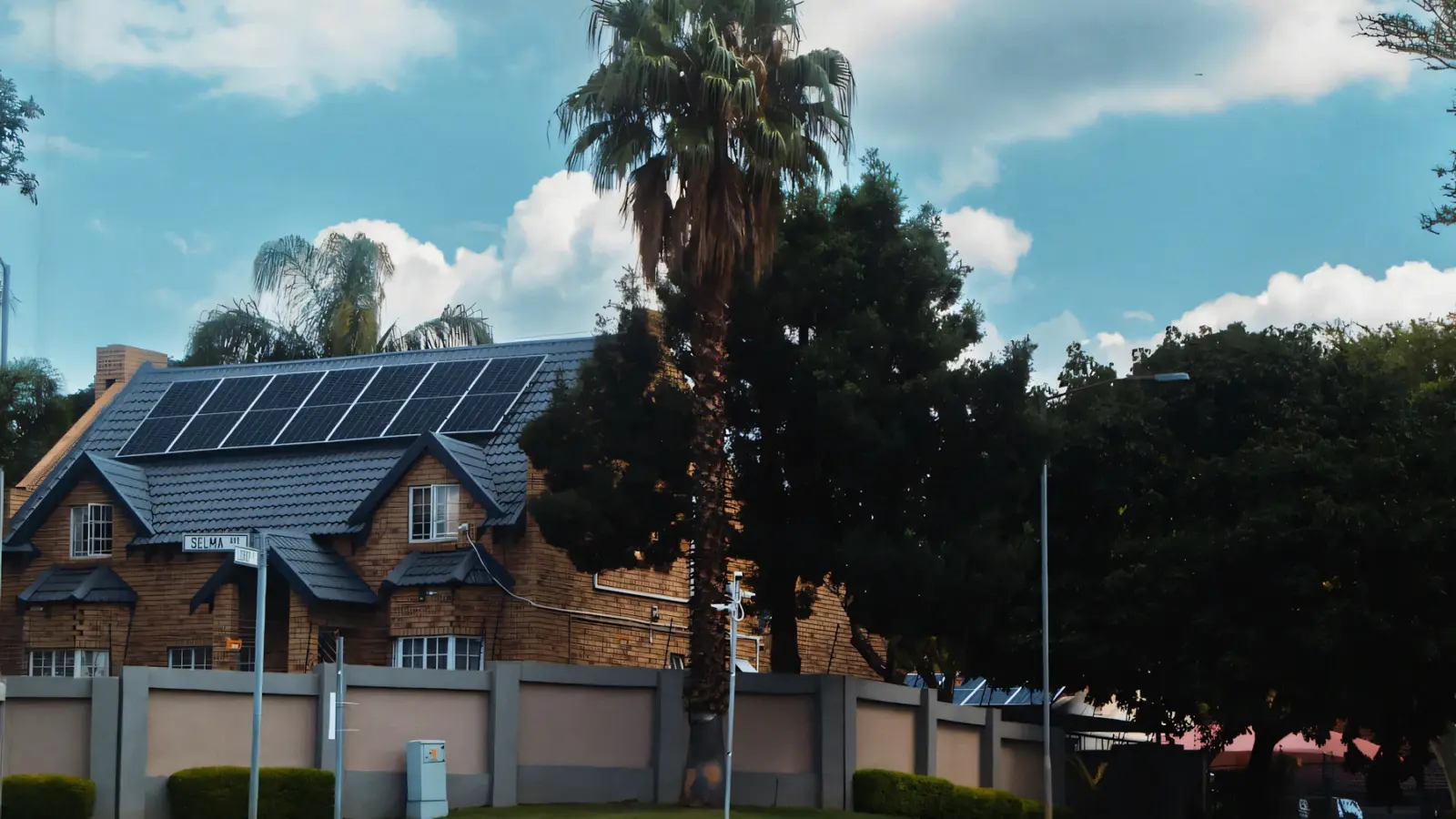
When a Pretoria buyer walks into a house with solar on the roof, the conversation usually turns quickly to the same thing, will it save me money. That is the wrong question. The real question is whether the system removes risk, saves hassle, and stays with the house without a fight at transfer.
In this market, backup power helps a property look easier to own. It can also help it sell faster. But the cheque a seller gets back is not a neat refund for every rand spent on panels, batteries, boreholes, wiring, and pumps. Buyers pay more attention to whether the system is compliant, properly installed, and clearly included than to the owner’s original invoice total.
What buyers actually notice
A buyer in Eldoraigne, Garsfontein, Faerie Glen, Waterkloof, Highveld, or Midstream is usually reading the same set of signals. Can the house keep the fridge running. Will the Wi-Fi stay up. Does the alarm still work when Eskom drops out. Is the geyser covered, or will I still be planning my day around outages. Those are practical questions, and practical answers carry weight.
A well-set-up solar or inverter system does more than sit there looking impressive on a roof visit. If it is wired into the house properly, switches over without drama, and carries enough storage to cover the normal outage pattern for that home, buyers see a real benefit. The same goes for a borehole that actually feeds the property reliably and comes with evidence to prove it.
The problem starts when the system looks like a half-finished solution. A small setup that only keeps a few lights on and charges phones will not rescue a family from load shedding frustration. It just tells the buyer they are buying a project.
Documentation does the heavy lifting
A neat installation helps. Paperwork closes the trust gap.
If there is a valid Electrical Certificate of Compliance, that changes the tone immediately. Buyers are no longer trying to work out whether they are inheriting a headache. They have proof that the electrical work was done within the rules, which matters for safety, insurance, and resale later on. If the system was installed by someone with proper PV GreenCard accreditation, that adds another layer of confidence because it signals a professional job rather than an improvised one.
The same logic applies to the rest of the file. Invoices for panels, inverters, batteries, or pumps help show what was bought. Warranty papers matter because a buyer wants to know what support still exists after transfer. System specifications and wiring diagrams are useful because they tell the next owner what the equipment can actually do, not what the seller hoped it might do on a good day.
For boreholes, the paperwork should go further. A drilling certificate, a yield report, and recent water quality results are not decoration. They are the difference between a useful water source and a guess. A buyer wants to know how much water the borehole produces and whether that water is fit for the intended use in the home. In Waterkloof, Garsfontein, or anywhere with serious garden and household demand, that makes a real difference.
Fixed stays, movable goes
This is where a lot of sales get messy.
If something is bolted, wired, or plumbed into the house, buyers will usually assume it forms part of the property. Roof-mounted solar panels, an inverter tied into the distribution board, batteries fixed in a cabinet or dedicated space, borehole pumps connected into the plumbing, these are all the sort of things that look and behave like part of the home.
A portable inverter trolley is a different story. So is a generator on wheels. So is any equipment that can be unplugged and taken away without leaving the house altered. Those are movable items, and if the seller wants to keep them, the offer to purchase must say so clearly.
The reverse also matters. If the seller plans to remove something that looks built-in, that needs to be spelt out before signatures, not after occupation when everyone is suddenly surprised. The same applies if the seller intends to leave movable equipment behind. If it is included, say it. If it is excluded, say that too.
A clear offer to purchase avoids the ugly post-sale argument where one side thinks the solar system was part of the deal and the other thinks it was only ever personal equipment. That kind of confusion is avoidable, and there is no reason to leave it hanging over transfer.
Bigger is not always better
Pretoria buyers are not impressed by backup power just because it exists. They are impressed when it solves the problem.
An undersized system can actually weaken a sale. If it only covers a few lights and the television, the buyer still has to budget for a proper upgrade. They can see the gap immediately. A half-measure is often more irritating than no system at all because it advertises the problem without solving it.
Owner-installed work is even more delicate. Once buyers start asking who wired it, whether the work was certified, whether the earthing is correct, and whether the equipment still carries warranty support, the mood changes fast. A system that was put together casually and never documented properly stops looking like an improvement and starts looking like a liability.
That is especially true when the buyer plans to rely on the property for day-to-day living in areas like Centurion, where households want a home that functions cleanly from the start. Remote workers, families with school routines, and owners who just want fewer interruptions all value a house that does not need a post-sale project.
What sells faster
Backup power rarely changes a price in a neat, itemised way. It changes the sale experience.
A home with a proper system feels easier to buy. The buyer does not have to organise installers, compare quotes, or wonder whether the roof layout will handle the job. They can imagine moving in and getting on with life. That removes friction, and reduced friction is valuable in any suburb where buyers have several similar homes to choose from.
This is why a well-documented solar setup, a compliant inverter installation, or a borehole with real proof often helps the home move sooner. It shortens the list of objections. It also gives the seller a stronger position when the rest of the property is sound, because the buyer is not mentally docking value for an obvious future expense.
In suburbs such as Highveld, Eldoraigne, Faerie Glen, and Midstream, where many owners are already thinking about resilience, that can be the difference between interest and hesitation. Buyers may not pay a dramatic premium simply because the house has backup power, but they are much less likely to walk away over load shedding if the solution is already in place and ready to use.
The cleanest selling position
If you are selling a Pretoria or Centurion home with solar, an inverter, or a borehole, the strongest hand you can give a buyer is clarity.
Show them what was installed, by whom, and with what paperwork. Make the certificate of compliance available. Include the specifications. State plainly what stays and what goes. If the system is fully fixed into the property, make that obvious. If there is a generator, trolley, pump, tank, or battery pack that is not part of the sale, say so before the first offer arrives.
That approach does two things. It keeps the deal tidy, and it lets the buyer see the property as a solved problem rather than a future job. That is where the real value sits.