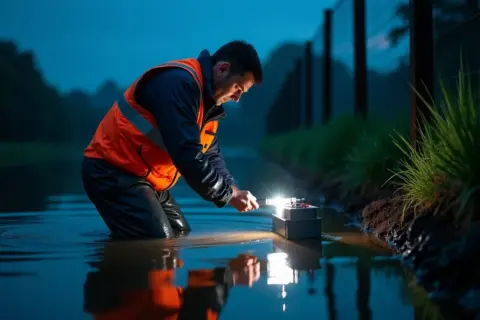

“Fibre available” is the most overpromised line in Centurion property listings. I have walked through homes in Die Hoewes where the agent meant a trench two streets away. Others in Highveld had an ONT already blinking green and ready for a router. That gap is the difference between moving in on Friday and waiting a month for trenching while your Teams calls drop through a 4G hotspot. Remote workers, tenants, and anyone selling to them need to understand what that phrase actually commits to.
What “Fibre Available” Actually Covers
The term stretches across three distinct conditions. At its weakest, it means a Fibre Network Operator has mapped the suburb for future rollout, with no cable in the ground yet. In the middle, infrastructure reaches the property boundary, and a fibre wall box sits on the exterior wall, but no line enters the home. At its strongest, an Optical Network Terminal (ONT) is installed inside, powered, and either active with an ISP or dormant and waiting for activation.
I checked sample addresses across Highveld, Die Hoewes, Amberfield, and Eldoraigne directly on FNO portals. Highveld Techno Park and surrounding estates consistently showed multiple operators with live infrastructure at the door. Die Hoewes presented a patchwork: Openserve’s legacy coverage dominates older streets, while Vumatel and Frogfoot have pushed into specific sections. Amberfield’s newer estates almost always launched with fibre from the developer, typically Vumatel or Frogfoot. Eldoraigne was the most variable of the four, with established pockets on Openserve and newer clusters on competing networks. Suburb-wide claims failed everywhere. Only street-level verification held up.
The FNO and ISP Split That Confuses Everyone
The Fibre Network Operator builds and owns the physical line. Vumatel, Openserve, Frogfoot, Octotel, and Evotel are the names you will see on trenching crews and wall boxes. They do not sell you internet. They sell wholesale access to Internet Service Providers, who then package speed tiers, data allowances, and support desks for end users.
An ISP like Afrihost, Webafrica, Cool Ideas, or MWEB leases capacity on a Vumatel line in Amberfield, layers on their own routing and billing, and delivers your 100Mbps symmetrical package. The ONT in your home belongs to the FNO and stays with the property. The router on top of it usually belongs to you or your ISP, and walks out with you.
Provider choice is tied to the FNO, not the address. A home on Openserve infrastructure can switch between any Openserve-partnered ISP. It cannot magically access Vumatel’s ISP pool without a second physical line. When buyers ask me about “fibre options,” I ask which FNO box is on the wall. That determines everything else.
What Remote Workers Should Verify Before Signing
Activation timelines split dramatically. A dormant line with an existing ONT typically reactivates in two to five business days with a new ISP account. A fresh installation from boundary to living room runs two to four weeks, assuming no trenching complications or wayleave delays. For someone starting a new role on Monday, that gap is unbridgeable.
Load shedding resilience is non-negotiable. The ONT and router both need power. A 1000VA UPS will keep standard networking equipment running for four to eight hours, enough for most Stage 4 cycles. I have seen tenants in Centurion Golf Estate treat this as standard equipment. Others in older Die Hoewes rentals are caught completely offline when Eskom schedules shift. Mobile failover via a 4G or 5G router with a pre-loaded Vodacom or MTN SIM provides the final safety net, although sustained mobile data costs add up quickly for video-heavy work.
Symmetrical speeds matter more than most residential buyers realise. 100Mbps down with 10Mbps up is fine for Netflix. It is miserable for back-to-back Zoom calls, cloud backups, and large file pushes. Remote workers should verify upload parity in any package they consider.
How Sellers Should Document What They Actually Have
If you are listing a property in Eldoraigne or Highveld, specificity converts to enquiries. State the FNO by name. Photograph the ONT and the exterior wall box. Clarify whether the line is currently active, dormant, or never activated. Note whether a UPS is included and where it is positioned.
The router is not a selling point unless you intend to leave it. Most ISP-provided routers are leased or replaceable. The ONT is the fixed asset; it belongs to the FNO. Confusing the two in a listing creates false expectations and frustrated handovers.
Where possible, provide the previous ISP name and account number with the buyer’s permission. This accelerates reactivation and signals that you have maintained the line properly. One seller in Amberfield handed me a folder with FNO details, ISP history, and UPS specifications. That property let within a week to a remote worker who had been burned by a “fibre ready” claim in a previous rental.
The Suburb Variations That Catch People Out
Centurion’s fibre map is not uniform, and Pretoria East compounds the complexity. Hazeldean and Silver Lakes estates often launch with multiple FNOs competing for developer contracts. Established Garsfontein or Faerie Glen streets may carry Openserve alone for years before overbuild arrives. Waterkloof’s older plots present the same Eldoraigne variability: one address fully serviced, the next still on copper ADSL waiting for trenching approval.
The quality of the physical fibre itself is largely consistent across reputable FNOs once installed. Perceived speed and reliability differences almost always trace back to the ISP’s network capacity, peak-hour congestion management, and support responsiveness, not the suburb or the operator laying the cable.
For buyers, tenants, and landlords in Centurion, the rule is simple: verify at the address, not the area. For sellers, the corollary is equally direct: document precisely what sits on the wall, and let the vague claims belong to someone else’s listing.